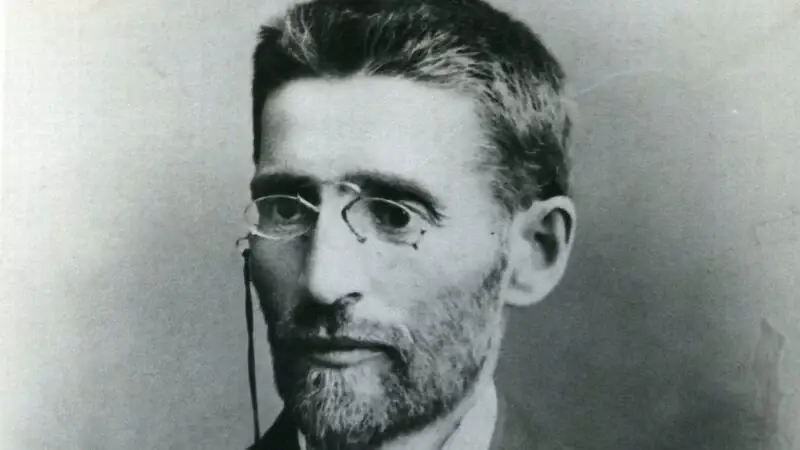
Languages evolve, and even ancient languages such as Hebrew that are still around today have gone through great changes over time. The modern Hebrew that we know today owes a large debt to a man named Eliezer Ben-Yehuda. When he came to Palestine in 1881, the Hebrew language was not widely spoken by Jews at all. It was the language of prayer, but not of everyday conversation, which was spoken in the dialects of the different regions Jews belonged to with noted differences, such as Yiddish. Not since the Biblical era were Jews actually speaking Hebrew in their day to day lives. However, Ben-Yehuda changed that. He was born in Lithuania in 1958 and was brought up with both a religious and secular education. This background informed his outlook on Jewish nationalism and the Hebrew language.
Ben-Yehuda loved Hebrew, and as he watched nationalist movements throughout Europe gain strength, he believed Jews from all over could foster a national identity as well and become united under the Hebrew language. While Jews were speaking a range of languages, including Yiddish, French, and Arabic, the medieval Hebrew that they had in common to communicate was used for Jews of different backgrounds. Ben-Yehuda saw a great opportunity here, and although the Hebrew that they spoke was not suitable to be a primary language, he worked with educators to update the language and come up with new words, building the Modern Hebrew dictionary. He made the mainstreaming of Hebrew his life’s work, and one month after he died, his dream came true, with the British Mandate dictating that Hebrew was the official language for Jews living in Palestine. Through his zeal and devotion to the language, he was able to give the burgeoning nation its lingua franca.


Leave a Reply